The 3 AM Problem
You fall asleep fine, but then — 3 AM. Wide awake. Heart racing. Sometimes drenched in sweat, sometimes just… awake. Your mind starts racing. You check the clock. You calculate how many hours until your alarm. And the more you try to sleep, the more awake you become.
If this is your nightly reality, you’re not alone. Up to 60% of women report significant sleep problems during the menopause transition. And unlike the occasional bad night, menopause insomnia is chronic — it grinds you down over weeks and months.
Why Menopause Destroys Sleep
Cause 1: Night Sweats
The most obvious culprit. Hot flashes that happen during sleep (night sweats) wake you up — sometimes multiple times per night. Even if you fall back asleep quickly, the fragmentation prevents deep, restorative sleep.
Cause 2: Declining Progesterone
Progesterone is your body’s natural sedative. It promotes GABA activity in the brain (the same pathway that sleeping pills target). As progesterone drops during perimenopause, your built-in sleep aid disappears.
Cause 3: Anxiety and Racing Thoughts
New or worsening anxiety is extremely common in perimenopause — and anxiety is the enemy of sleep. The 3 AM wake-up followed by racing thoughts is a classic pattern.
Cause 4: Bladder Changes
Declining estrogen affects the urinary tract, making nighttime urination more frequent. Getting up twice a night to use the bathroom fragments your sleep significantly.
Cause 5: Circadian Rhythm Shifts
Estrogen helps regulate your body’s circadian clock. As it fluctuates, your sleep-wake rhythm can shift — making you sleepy earlier and waking you earlier.
What Doesn’t Work
Let’s clear the table first:
- Scrolling your phone at 3 AM — blue light suppresses melatonin and trains your brain that bed = screen time
- Alcohol as a sleep aid — it might help you fall asleep but fragments the second half of the night
- Long-term sleeping pills (benzodiazepines, Z-drugs) — dependency risk, daytime drowsiness, and they don’t improve sleep quality
- Lying in bed trying harder — this creates performance anxiety about sleep, making it worse
What Actually Works
1. Cognitive Behavioural Therapy for Insomnia (CBT-I)
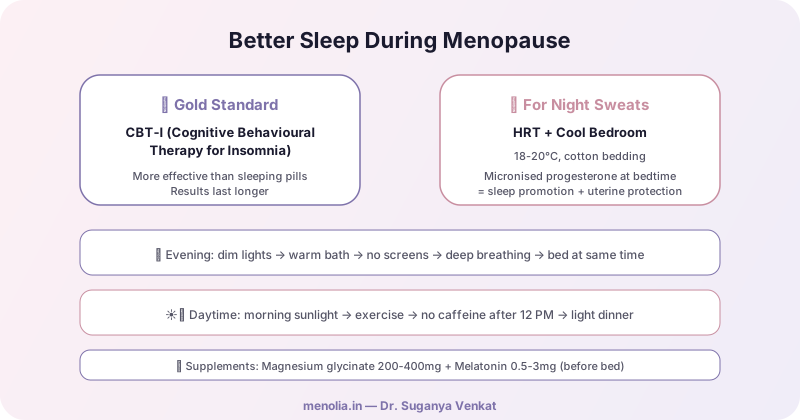
This is the gold standard — recommended as first-line treatment by every major medical guideline. CBT-I is more effective than sleeping pills and the results last longer.
CBT-I includes:
- Sleep restriction — counterintuitively, spending less time in bed improves sleep quality
- Stimulus control — only use bed for sleep; get up if you can’t sleep within 20 minutes
- Cognitive restructuring — challenging anxious thoughts about sleep
- Relaxation training — progressive muscle relaxation, breathing techniques
You can do CBT-I with a therapist (ideal) or through apps and online programs.
2. Treat Night Sweats
If night sweats are your primary sleep disruptor:
Environmental:
- Bedroom temperature 18-20°C
- Moisture-wicking cotton or bamboo bedding
- Layer blankets (so you can throw them off)
- Keep a cool towel or fan by the bed
- Wear light, breathable sleepwear
Medical:
- HRT — the most effective treatment for night sweats. If night sweats are destroying your sleep and you’re a candidate for HRT, it can be transformative
- Low-dose SSRIs/SNRIs — if HRT isn’t an option
- Gabapentin — helps both hot flashes and sleep
3. Sleep Environment Optimisation
- Complete darkness — blackout curtains, no LED lights, cover alarm clock displays
- Cool temperature — 18-20°C (cooler than most people keep their bedroom)
- Quiet — earplugs if needed, or white noise
- Comfortable mattress — if yours is old, it’s worth the investment
- No screens in the bedroom — charge your phone in another room
4. Evening Routine (Build a Wind-Down)
Start 60-90 minutes before bed:
- Dim lights — signal melatonin production
- No screens — or use strong blue light filters
- Warm bath or shower — the subsequent body temperature drop promotes sleep
- Light reading (not on a screen)
- Gentle stretching or yoga
- Deep breathing — 4-7-8 technique (inhale 4 counts, hold 7, exhale 8)
5. Daytime Habits That Improve Sleep
- Morning sunlight — 10-15 minutes of bright light within an hour of waking resets your circadian clock
- Exercise — but complete it at least 3-4 hours before bed
- No caffeine after 12 PM — caffeine has a 6-8 hour half-life
- Limit alcohol — especially in the 3 hours before bed
- Light dinner — heavy meals close to bedtime disrupt sleep
6. Targeted Supplements
Evidence varies, but these have some support:
- Magnesium glycinate (200-400mg before bed) — promotes muscle relaxation and GABA activity
- Melatonin (0.5-3mg) — may help if your circadian rhythm is shifted; lower doses often work better
- Ashwagandha (300mg) — may reduce cortisol and promote calm
- Valerian root — mild sedative; evidence is mixed but some women find it helpful
Note: Always check with your doctor before starting supplements, especially if you’re on medication.
7. HRT for Sleep
If your sleep problems are driven by night sweats, mood changes, or anxiety related to hormonal decline, HRT can be remarkably effective:
- Reduces night sweats (the most direct impact on sleep)
- Micronised progesterone specifically has sleep-promoting properties (given at bedtime)
- Improves mood and reduces anxiety
- May help restore circadian rhythm
Dr. Suganya often prescribes micronised progesterone specifically at bedtime for its dual benefit — uterine protection + sleep promotion.
A Realistic Sleep Plan
Here’s what I recommend to my patients:
Week 1-2: Fix the basics — cool dark bedroom, no screens 1 hour before bed, no caffeine after noon, consistent sleep/wake times
Week 3-4: Add a wind-down routine + magnesium glycinate before bed
Week 5-8: Start CBT-I (app or therapist) if insomnia persists
If night sweats are severe: Discuss HRT at any point — don’t suffer for weeks waiting for lifestyle changes to work when a medical solution exists
Ongoing: Regular exercise (morning/afternoon), stress management, address mood changes
When to See a Doctor
See your doctor if:
- You’ve had insomnia most nights for more than 4 weeks
- Sleep problems are affecting your work, relationships, or safety (drowsy driving)
- You’re relying on alcohol or over-the-counter sleep aids regularly
- You snore loudly or your partner notices you stop breathing during sleep (possible sleep apnoea)
- You have severe night sweats despite lifestyle changes
The Bottom Line
Menopause sleep problems are not something you have to accept. They’re treatable — often dramatically so — with the right combination of approaches.
At Menolia, Dr. Suganya addresses sleep as a priority, not an afterthought. Because when you sleep well, everything else — mood, brain fog, weight, energy — improves too. Sleep is the foundation.